
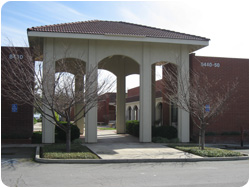
 KWJ Engineering Inc. is a California corporation dedicated to specialized gas detection applications in the safety field. The Company was started in 1993 by Ken Johnson, after the sale of his previous company, GasTech, to Thermo Electron in 1992. Staffed by personnel experienced in the manufacture and supply of gas detection instruments, the Company can bring together the elements needed to solve any detection problem. In 2007, KWJ merged with Transducer Technology, Inc., adding the development of the next generation of nano-technology based sensors to KWJ’s history of excellence in gas detection instrumentation. In January of 2008, KWJ acquired Eco Sensors, Inc., the Santa Fe, NM based market leader in functional ozone detection and monitoring equipment for industrial uses. KWJ and its members have a long history of successful ventures in the gas detection industry, and look forward to an even brighter future.
Technology & Management Team
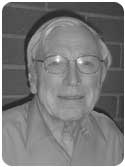 Kenneth Johnson, Co-Founder (1922-2014)
We are sad to report the passing of our Founder, colleague and friend Kenneth W Johnson at the age of 92. Ken was not only our best instrument engineer at KWJ but our mentor. He came to work every day, and half day on most Saturdays up until the last few months. Ken was a person of very high integrity in his engineering, business, and personal life. A true professional and also a visionary in seeing ways to integrate a plan for the future into the present activity. We will miss him dearly.
Ken Johnson was previously the founder and owner of GasTech Inc. from 1971 until its sale to Thermo Electron in 1992. He started KWJ Engineering in 1993 as a provider of specialized gas detection instruments and systems. Earlier he was a principal of Johnson-Williams, Inc., which was acquired by Bacharach in 1965. He had full-time involvement in development, design and application of gas detection instrumentation since 1947, and Ken’s father developed the first modern combustible gas detector. Ken had a BSME from CalTech, an MSEE from Stanford, and was a Registered Mechanical Engineer in the State of California. He originated many of the concepts and features of gas detection instruments in use today, and was honored as a Fellow of ISA in 1992 for his life’s work in gas detection instrumentation.
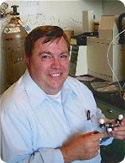 Dr. Joseph R. Stetter, President
Dr. Stetter obtained a Ph.D. in Physical Chemistry from the University at Buffalo (SUNY) in 1975. In the 1970s, Dr. Stetter was Director of Chemical Research at the Energetics Sciences Division of Becton Dickinson and Company [a fortune 500 company] where he developed the first diffusion-type electrochemical CO sensors; the earliest diffusion CO dosimeters; solid-state gas sensors for CO, NOx, SO2, other toxic gases, and an electrochemical hydrazine sensor still in use by NASA. While at the Argonne National Laboratory in Chicago, IL in the ’80s, he led the development of the first integrated and operational “sensor-array-based” instrument with pattern recognition (now called electronic nose). In the 80s, Dr Stetter founded TRI [Transducer Research, Inc.] where he developed portable instruments and sensors for CO, CO2, end of service filter indicators, chlorinated hydrocarbon sensors, NOx sensors, personal protection instruments, and low cost effective protection equipment for human health and the environment. In the 90’s, he sold TRI and became Professor of Chemistry at the Illinois Institute of Technology, started the sensor research group, taught in both chemistry and business schools, founded the International Center for Sensor Research and Engineering at IIT, and mentored both MS and PhD students. He founded Transducer Technology, Inc. [TTI] a startup company focusing on nano-technology enabled sensors and instruments in 1999. In 2007 TTI merged with KWJ Engineering, Inc of Newark, CA making nano-sensors for health, safety and process control applications. From 2004 to 2009, Dr. Stetter was Director of the Microsystems Innovation Center for SRI International [Menlo Park, CA]. SRI’s Research and Engineering work focused on new sensors, unique structures/materials, artificial senses, chem/bio sensors, novel MEMS for drug and vaccine delivery; vacuum microelectronics including micro electron and ion sources, and micro/nano-structures and bio-MEMS. Upon leaving SRI in 2009, Dr. Stetter joined KWJ Engineering full-time as its President and CTO. At KWJ, Dr. Stetter has greatly expanded the company’s funded research and product development efforts, advancing new proprietary sensor technologies. Dr. Stetter has published more than 200 technical articles, written book chapters, and has more than 30 domestic and foreign patents. He has served as Chairman of the Electrochemical Society Sensor Division and served on the boards of national and international technical societies. He has organized national and international scientific meetings and symposia in his field and serves as editor and reviewer for scientific and engineering journals. His awards include three IR-100 Awards for new product development; the Federal Laboratory Consortium Special Award for Excellence in Technology Transfer; the Argonne National Laboratory Inventor’s award; the Technology Management Association of Chicago’s 2002 “Entrepreneur-of-the-Year” award, and two NASA New Technology Awards. He is also on the board of directors for several start-up companies. There are many commercial products based on Dr. Stetter’s work that are in worldwide use today, protecting human health and the environment as well as providing industrial analysis.
Edward F. Stetter: CFO
Ed Stetter has a B.B.A. in Marketing and a B.S. in Computer Applications from the University of Notre Dame, and a J.D. from the Illinois Institute of Technology: Chicago-Kent College of Law. Ed joined KWJ Engineering Inc. as its CFO in 2007, following several years of private corporate and real estate law practice. Ed was previously the President of Transducer Technology, Inc., prior to its merger with KWJ Engineering Inc. in January 2007, and is currently Vice President and General Manager of KWJ Engineering Inc.
Melvin Findlay: Director, Head of New Product Development
Mr. Findlay has a BA in Chemistry and a MSc. Environmental Chemistry/Env. Health Engineering (Northwestern University) and more than 25 years experience in environmental chemistry, analytical methods and the development of portable instrumentation. He joined KWJ staff in August, 2007, after consulting on sensor-related projects. Prior to KWJ he managed an environmental analysis laboratory at Argonne National Laboratory working with Dr. Stetter to develop the first sensor-array based instrument, the CPS-100 “Chemical Parameter Spectrometer.” He is co-inventor on the patents for this instrument developed for the US Coast Guard and Drug Enforcement Agency. In addition to ANL, Mr. Findlay has worked with Transducer Research, Inc, (TRI) as Sr. Chemist and Laboratory Manager developing chemical sensor arrays to monitor food and grain quality and a line of commercial electrochemical sensors, and at TSI Inc. where he was responsible for sensor selection, design and manufacture, and sampling design for a series of successful products, including the QTtrack® and IAQ-Calc® indoor air quality monitors, and the CACalc® and CombuCheck® combustion analyzers.
Our Staff
KWJ is a small business with its 30+ staff that includes a growing number of Ph.D., M.S., and B.S. level engineering and scientific professionals as well as an experienced manufacturing department. The senior staff have advanced degrees in Electrical, Mechanical, Computer, and Materials Engineering, as well as Electrochemistry, Analytical chemistry, physical chemistry, and Chemical Engineering. The interdisciplinary staff share the focus of building sensors and instrumentation for field use making KWJ a powerful resource for new product development and engineering with the ability to function in a small creative agile entrepreneurial environment.